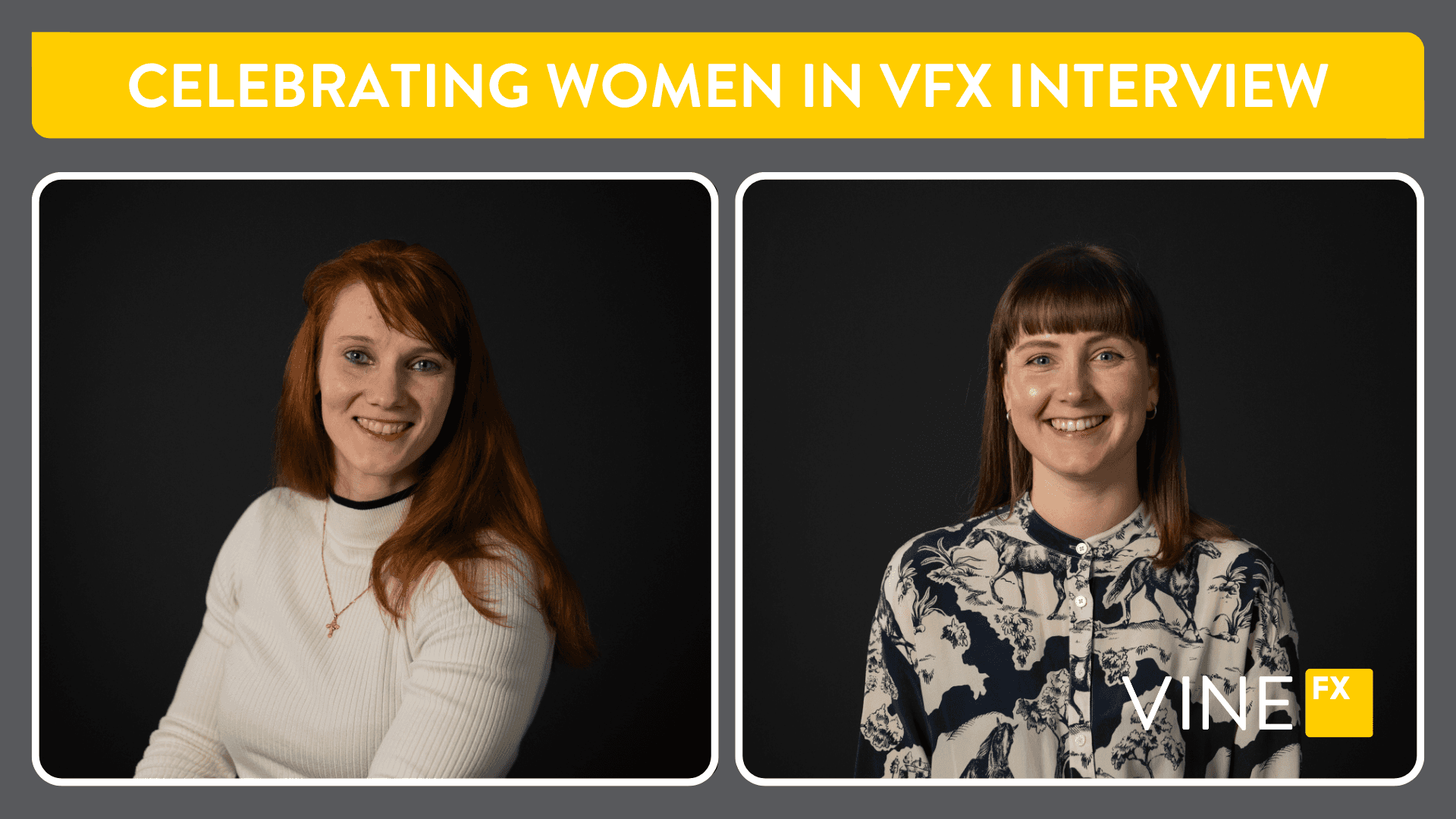
VFX Blog: Celebrating Women in VFX
Celebrating Women in VFX: A Conversation with Alesja Surubkina (VFX Supervisor) and Jessica Lennox (Senior Lighting TD)
Originally created for Women’s History Month, this interview is about celebrating the women shaping the VFX industry. Alesja and Jessica share their journeys into VFX, the realities of building a career, and the perspectives they bring to both creative and technical roles.
1. Can you tell us about your journey into the VFX industry and what sparked your interest?
Alesja:
For me, it really clicked at a university open day. There was this clip of a T-Rex rampaging across a university campus, and I remember thinking, “Wait,you’re telling me I can create something like that from my own computer?” That was the moment. Before that, I’d been casually editing videos and making small projects, but I had no idea VFX was even a career path. It wasn’t something anyone around me talked about. A tutor noticed what I was doing and suggested VFX, and that completely changed my direction.
Jessica:
I had a very similar experience,I went to a university open day and saw that same T-Rex shot, and it just stuck with me. I was obsessed with dinosaurs growing up, so that definitely helped! I’d already been into illustration and 2D animation, so I knew I wanted something creative, but VFX felt like it opened up a whole new world. It’s quite a hidden industry when you’re younger, so discovering that it was even an option felt really exciting,like, this could actually be a job?
2. Did you initially see VFX as a male- dominated industry?
Alesja:
Honestly, I didn’t think about it at all in the beginning. I’ve always just followed what I enjoy doing,I never really stopped to consider whether something was male- or female-oriented. It just didn’t factor into my decision.
Jessica:
Same here. It only really became noticeable once I got to university and saw the ratio on the course,it was mostly male. But even then, it wasn’t something that put me off. Up until that point, it was just something I thought looked fun and creative.
3. What was your journey from university to joining the industry?
Alesja:
It was definitely not a smooth start. Even getting into university was a bit of a challenge because my background was more in maths, sports, and IT,I couldn’t draw, which a lot of courses expected. Once I got in, I struggled at first, but things improved when I leaned into video editing and found my niche. After graduating, I did work experience at a studio in Cardiff, and that connection was incredibly valuable,the coordinator there really supported me and helped me get my first opportunities.
The first year in the industry was tough. I moved between several roles,some paid, some unpaid,and even got let go from one job after just a few weeks because the project moved elsewhere. It was unstable and, at times, quite discouraging, but I kept pushing through, taking whatever opportunities I could and slowly building experience.
Jessica:
My path was a bit more structured, but still had its stepping stones. I showcased my work at a university expo and got picked up by a small studio. It didn’t last long, but it gave me that crucial first experience. After that, I joined an animation studio, which was a great environment to grow in, especially working on stylised 3D content.
From there, I transitioned into VFX for film and TV, moving through a few studios and gradually building up my skills. Each step added something new,whether it was technical ability, confidence, or understanding how different teams work together.
4. Have you seen meaningful changes in representation for women in VFX?
Jessica:
Yes, definitely. There’s been a noticeable increase in visibility,more events, panels, and organisations focused on supporting women in VFX. I’ve been involved in some of those spaces, and they make a real difference. You’re also seeing more women in artist roles now, whereas historically production roles had stronger female representation.
What stands out to me is how important visibility is,especially for students. When you see people like you in those roles, it makes the industry feel more accessible.
Alesja:
From my perspective, I’ve noticed more women in compositing roles over time. Earlier in my career, it often felt like I was the only one in that space. Now, it’s definitely more balanced, which is really encouraging to see.
5. Can you share a project you’re particularly proud of?
Alesja:
One that really stands out is an animated project based on Raymond Briggs’ work. It felt like going back to my roots creatively, as I’d started out doing animation. It was also my first long-term contract,about a year,and where I properly learned Nuke while working on real shots.
Beyond the technical side, it was the people that made it special. I built strong friendships there, many of which have lasted, and those connections even helped me later in my career. It was one of those projects that shaped both my skills and my network.
Jessica:
For me, it’s less about big-name projects and more about the experiences within them. One highlight was stepping into a lead lighting role for the first time,that shift from being part of a team to guiding one was a big moment for me.
I also really value projects where I’ve been trusted to try something new. For example, I expressed interest in grooming (working with CG hair and fur), and my team supported that by giving me training and real opportunities to apply it. That trust and encouragement made a lasting impression.
6. What strengths do women bring to VFX?
Jessica:
I think it’s about bringing different perspectives to storytelling and collaboration. That can influence everything from creative decisions to how teams communicate. I’ve also found that there’s often a strong sense of support and empathy among female colleagues, which helps create a positive working environment.
That said, it’s not about doing things “better” or “differently” in a strict sense,it’s about adding another dimension to the team dynamic.
Alesja:
I’ve always approached my work without really focusing on gender differences. From my experience, everyone contributes in their own way, and I’ve always felt supported by the people I’ve worked with. For me, it’s more about the individual than anything else.
7. Who has inspired you in your career?
Jessica:
There was a creative director I worked with early on who really stood out. She was incredibly supportive, especially toward junior artists, and made a real effort to help people grow. She was also highly respected within the company, which made her an even stronger role model.
She showed that you can lead with both skill and empathy,and that combination really stuck with me.
Alesja:
For me, it was the coordinator from my first work experience. She played a huge role in helping me get started,connecting me with opportunities and supporting me both professionally and personally. She was organised, driven, and genuinely cared about the people she worked with. I owe a lot of my early progress to her.
8. What advice would you give to young women entering the industry?
Alesja:
Don’t be afraid to try. It might feel intimidating at first, especially if you think it’s male-dominated, but in my experience, people are welcoming. Also, try different types of studios,big and small,because they offer very different experiences, and you’ll learn something valuable from both. Stick with this industry. The start can be challenging, but if you’re dedicated, it becomes incredibly rewarding.
Jessica:
If you’re interested, go for it,there’s absolutely space for you here. I’d also say pay attention to the people and environment you’re stepping into. The team you work with can have a huge impact on your experience, sometimes even more than the projects themselves.
Also, be open to feedback and don’t take it personally,it’s part of the process. And if you can, spend time working alongside others in person. Building those relationships and learning directly from your team is invaluable.
Alesja – VFX Supervisor
9. How do you balance creative vision with technical and production constraints?
It always starts with collaboration. We look at what each department can realistically achieve, what the budget allows, and what the timeline looks like. Research is also key,whether it’s studying real-world references or understanding how something should behave.
From there, it’s an iterative process. You present ideas to the client, gather feedback, and adjust. Sometimes they want realism, sometimes something more stylised,it’s about finding that balance while keeping everything achievable.
10. What does effective leadership look like to you?
In the studio, it’s about being organised, clear, and approachable. On set, it’s a different level of responsibility,you’re making decisions that will directly impact what the team has to work with later. There’s no undo button.
Good leadership also means understanding people. Every artist works differently, so you need to adapt your approach to get the best out of them.
11. How has your leadership style evolved?
Earlier in my career, I focused mostly on the technical side. Over time, I’ve realised that leadership is just as much about people. Learning how to communicate effectively, when to step in, and how to support different personalities has been a big part of that growth.
Confidence is also key,the more confident you are in your decisions, the more your team trusts you.
12. What excites you about the future of VFX?
The constant evolution. There are always new tools, new workflows, and new ways to solve problems. It keeps things fresh, and there’s always something new to learn,which is both challenging and exciting.
Jessica – Senior Lighting TD
14. How do you use lighting to enhance storytelling?
Lighting is all about guiding the viewer,where they look, how they feel, and what they focus on. Colour plays a huge role in setting mood, and contrast helps direct attention.
In full CG scenes, you have more freedom to shape the look creatively, even bending reality a bit to serve the story. In plate-based work, you’re more constrained,you need to match what’s already there while still supporting the narrative.
15. What are key technical and artistic considerations?
Efficiency is a big one. You need to balance quality with render times, especially on large or complex scenes. It’s also about making sure what you produce works for the next stage in the pipeline,if you’re not giving comp what they need, it slows everything down.
16. How do you stay current with evolving tools and technology?
It’s a mix of staying connected and being curious. We share updates within the team, attend industry events, and learn from each other. You can’t keep up with everything on your own, so collaboration really helps.
Being open to change is important too,adapting workflows and trying new tools is how you grow.
17. What’s a challenge that pushed you creatively or technically?
Working on heavy environments,like underwater scenes,can be really demanding. You’re dealing with lighting, noise, and long render times all at once. Finding that balance between quality and efficiency can be tricky, especially under tight deadlines.
18. What details make the biggest difference in a final shot?
Attention to reference is key. Whether it’s studying a plate, looking at on-set footage, or researching something from scratch,it all feeds into making the shot believable.
Also, communication. Checking in with other departments and making sure everything aligns can make a huge difference to the final result.